Guide Library
Seasonal
Beginner
1-2 days

Spring Fit-Out Checklist: Cover to Launch

Spring is where a good winter lay-up pays for itself. Most launch-day problems are jobs skipped in autumn or rushed in spring, so work through this checklist in order and she goes back in the water ready for the season. It covers both wooden and fibreglass (GRP) hulls: where the jobs differ, each step says which applies to your boat. The guides linked at the end cover each engine and water-system job in detail.

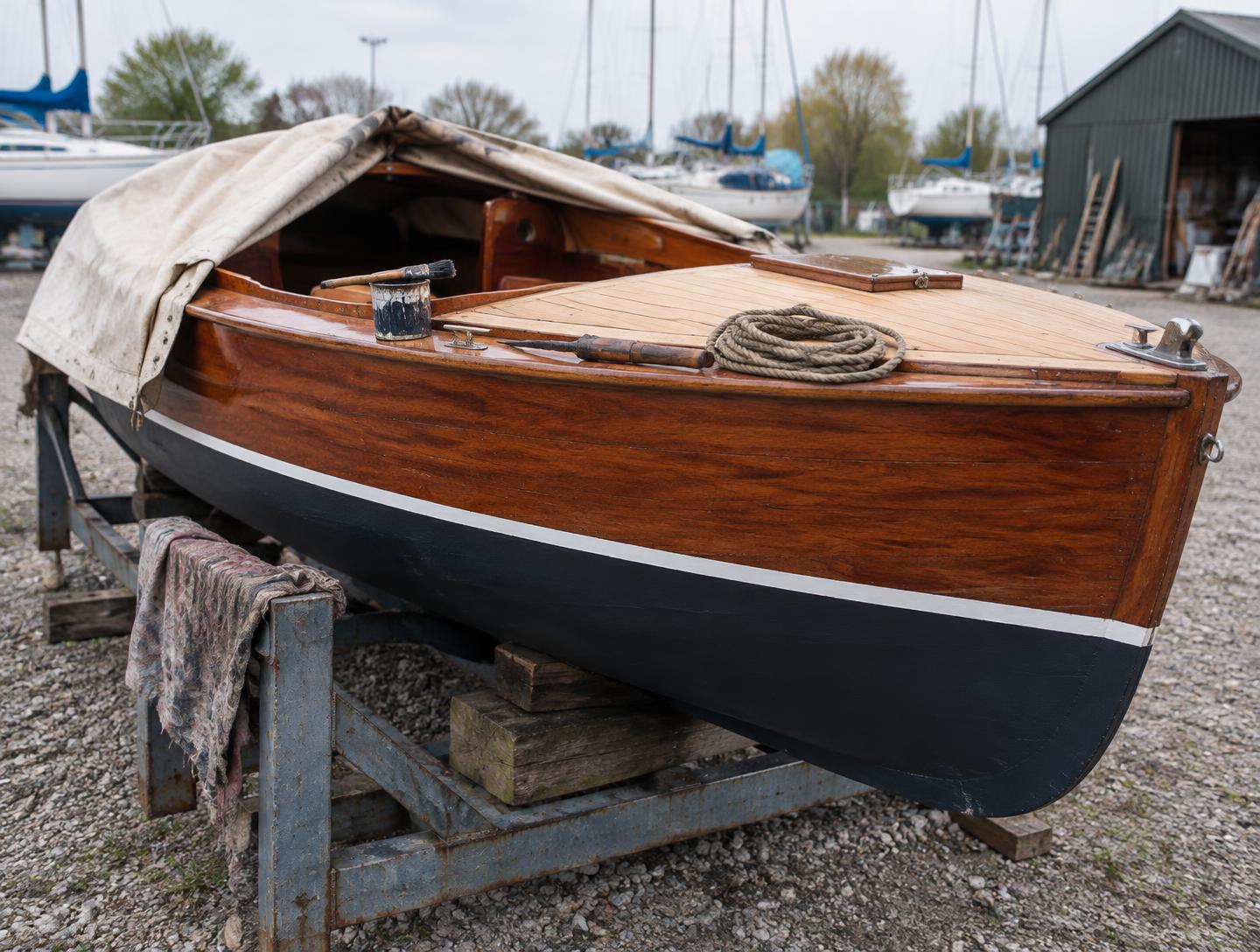
Traditional wooden boat on a cradle in a spring boatyard with her cover half off, a varnish pot and brush on deck and fresh antifouling below the bootstripe

Tools and materials

  • •Hose and soft brush
  • •Antifouling and roller
  • •Caulking iron and seam compound (wooden hulls)
  • •Cutting compound, polish and wax (GRP hulls)
  • •Gelcoat repair kit (GRP hulls)
  • •Fresh engine oil and filters
  • •Replacement impeller
  • •Multimeter and battery charger
  • •Potable-water sanitizer tablets

1. Uncover and inspect

Pick a dry day and take the cover off properly. Fold it away clean and dry so it stores without mildew — or leave it fitted loosely if hard frosts are still likely in your area.

Look underneath everything as you go: water lying in the bilge, mildew on cushions, cracked hoses, and bird nests in vents and cowlings are the classic finds.

Check the cradle pads or trailer rollers are still bearing evenly. A wooden hull moves as timber shrinks and swells over winter, and a GRP hull resting hard on one pad can dent or show stress cracks around it.

Read the full guide

Sign up free to read the remaining 6 steps. 30-day free trial, no card needed.

Frequently asked questions

When should I start spring commissioning?

There is no benefit to uncovering a boat before the last hard frost is past — the antifreeze is still doing its job until then. Start four to six weeks before your planned launch, so the hull and engine jobs are done with a weekend to spare and you are not rushing antifouling touch-ups the day before she goes in.

How do I tell if my GRP boat has osmosis?

Look for blisters below the waterline after hauling out. Blisters that weep fluid with a vinegar-like smell when pricked are a strong sign. A surveyor's moisture reading after the hull has dried for a few weeks gives a proper answer before you decide on treatment.

Do I need to change the engine oil again in spring?

No. If you changed the oil at lay-up, the engine sat all winter with clean oil in it, which is exactly what you want. Check the level, and if the oil looks milky that means water has got in — investigate that before running the engine.

How do I get the antifreeze out of the water system?

Flush with fresh water through every tap until the taste is completely gone, then dose the tank with potable-water sanitizer tablets at the label rate, run the treated water through all taps, wait the stated contact time, and flush again. Never mix sanitizer with other chemicals.

What should I check first after launching?

Through-hulls and the stern gland or shaft seal. A wooden boat takes up over the first day or two afloat, so expect some water and watch the bilge; a GRP boat should stay dry, so trace any leak at once. Run the boat safety pre-check before your first trip out.

Advice here is general guidance only — see our disclaimer. Need a professional? Browse local trades.