Guide Library
Engine
Intermediate
Half a day

Winterising Your Boat Engine

A cold snap can damage an engine even when the boat is under cover. This guide focuses on inboard marine diesels, separating the raw-water circuit from the closed coolant circuit and setting out the jobs to finish before frost. Your engine and gearbox manuals take priority: petrol engines, outboards and some cooling systems need different storage procedures.

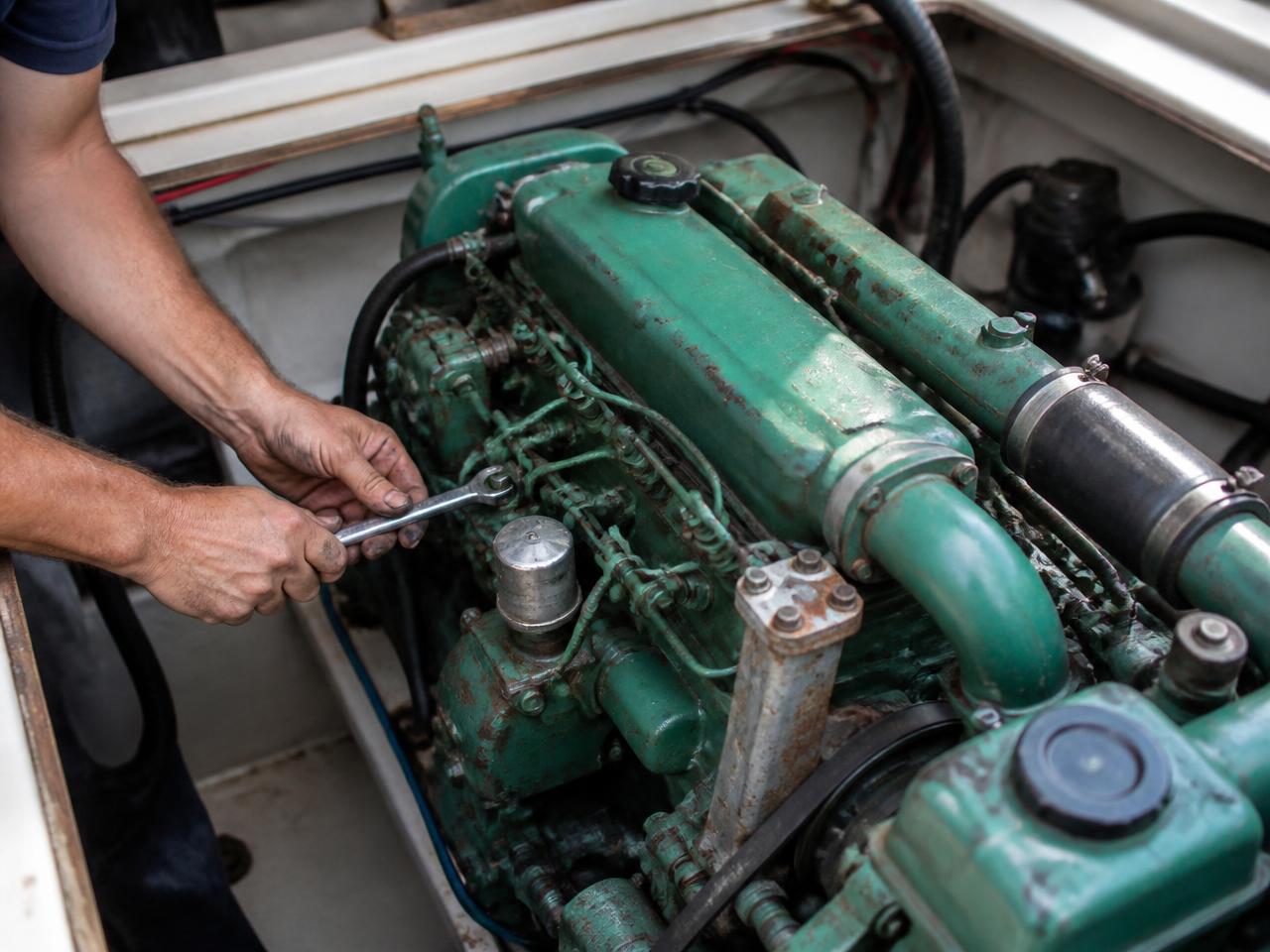
Marine diesel engine installed in a boat engine bay

Tools and materials

  • •Engine, gearbox and battery manuals
  • •Specified engine oil and replacement filter
  • •Oil extractor, drain tray and labelled waste containers
  • •Manufacturer-approved coolant and raw-water winterising fluid, if specified
  • •Antifreeze tester suitable for your coolant type
  • •Correct fuel filters, seals and approved fuel treatment if required
  • •Hand tools, gloves, eye protection and absorbent pads
  • •Battery-compatible charger and helm warning tags

1. Plan the lay-up and work safely

Identify your engine model and whether it is directly raw-water cooled or has a heat exchanger and a separate closed coolant circuit. Find the storage instructions, drain points, fluid specifications and spring recommissioning procedure before dismantling anything. Arrange a marine engineer if you cannot identify the system or reach its drain points.

Run an engine only with the correct cooling-water supply, good ventilation and a safe exhaust outlet. Never run it in a closed shed or under a sealed cover, and never let the raw-water pump run dry. Keep people clear of belts and the propeller; follow the yard's rules for running ashore. Stop, isolate starting power and let hot parts cool before hands-on work. Never open a hot coolant pressure cap.

Read the full guide

Sign up free to read the remaining 7 steps. 30-day free trial, no card needed.

Frequently asked questions

Do I need to winterise an engine if the boat stays afloat?

Yes, frost can reach the raw-water circuit even afloat. Follow the engine maker's storage procedure before freezing weather, keep intake connections secure and preserve automatic bilge-pump power. A cover or cabin heater is not a substitute for protecting cooling passages.

Is pink antifreeze at the exhaust enough?

No. Colour alone does not confirm freeze protection throughout the engine. Residual water, closed thermostats and bypass passages can leave weak mixtures or untreated areas. Use the maker's draining, concentration and testing procedure for your specific cooling system.

Can I winterise without electricity at the berth?

Many engines can be protected using their specified draining or flushing procedure without shore power. Plan battery storage and periodic checks separately, and do not depend on an unattended heater. Afloat, retain reliable power for automatic bilge pumps and alarms.

Should I fog a diesel engine?

Not unless your engine maker specifies a particular corrosion-protection procedure. Petrol-engine fogging advice is not a general diesel instruction, and some fuel-injected petrol engines also require a different method.

Manufacturer references

Advice here is general guidance only — see our disclaimer. Need a professional? Browse local trades.