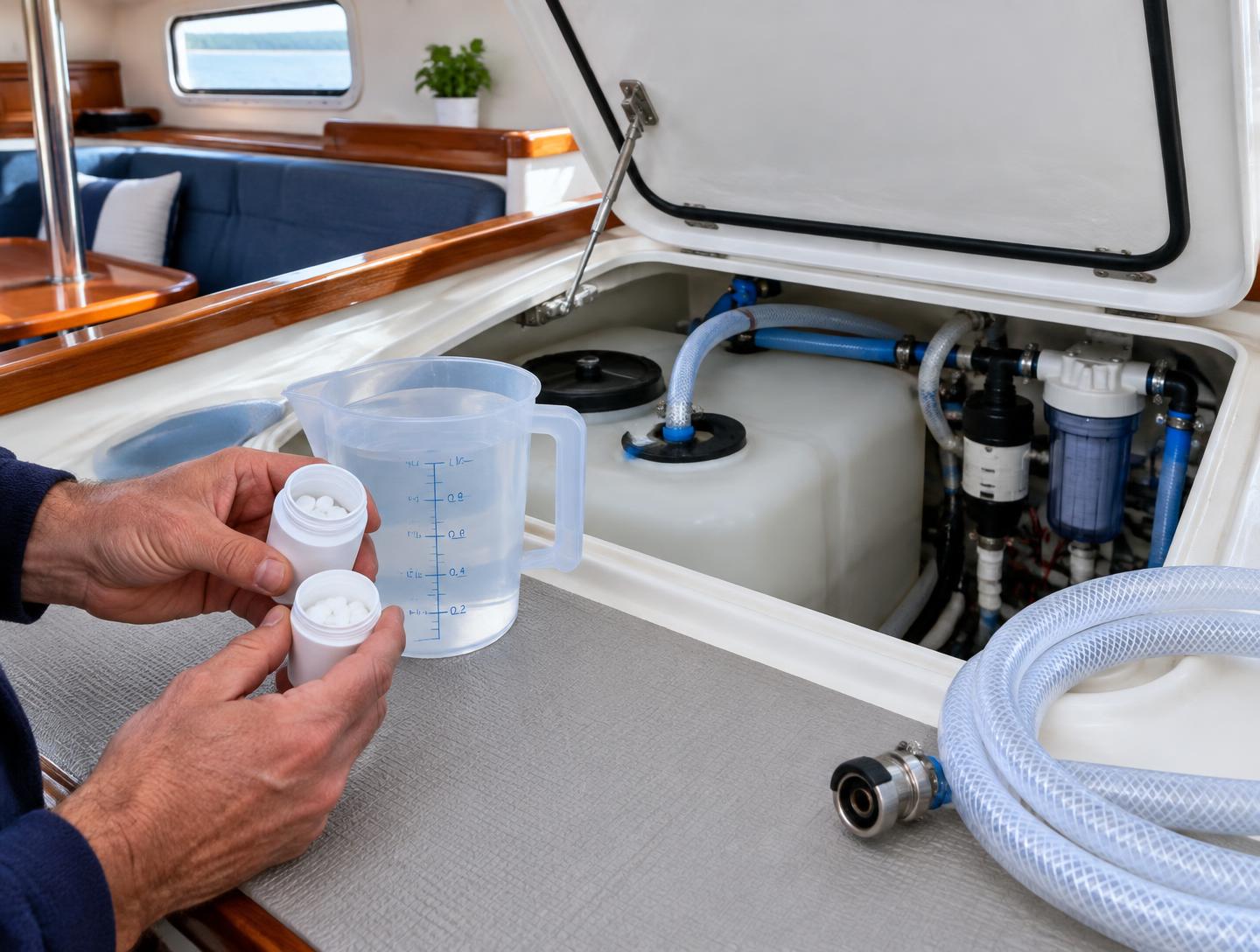
1. Inspect the complete freshwater system
Switch off the water pump and inspect the tank, filler cap, vent, hoses, clips, pump strainer, accumulator, taps and water heater. Repair leaks, replace perished hose and clean a blocked vent before treating the water.
If you can reach the tank through an inspection hatch, look for sediment, slime, scale or an unusual smell. Contamination must be physically removed where possible; adding more chemical is not a substitute for cleaning a dirty tank.
2. Empty and clean the tank
Drain old water through the taps and tank drain if fitted. Remove loose sediment with a dedicated clean wet vacuum, sponge or soft brush that has never been used with fuel, bilge water or household cleaners.
Wash accessible surfaces with clean water and a product explicitly approved for potable-water tanks. Rinse away all debris. Do not use ordinary scented detergent because residue can taint the water and is difficult to remove from hoses.
3. Work out the correct tablet dose
Use only sanitizer or sterilising tablets whose packaging states that they are suitable for drinking-water tanks. Never use swimming-pool tablets, household cleaning tablets or an unidentified chemical.
Confirm the usable tank capacity in litres, then follow the product label for that exact volume and purpose. Routine treatment and shock sanitising usually require different doses and contact times, and tablet strengths vary between brands, so a universal tablet count is unsafe.
For example, if the label says one tablet treats a stated number of litres, divide the tank’s usable capacity by that figure and follow the label’s rounding instruction. Do not guess the tank size or exceed the stated dose.
4. Sanitize the tank and pipework
Wear the protection specified on the packet. Dissolve the tablets first if the manufacturer instructs you to, add them at the filler, then partly fill the tank so the incoming water mixes the treatment. Fill to the required level.
Run each cold and hot tap, shower and deck outlet until treated water reaches it, then close it. Leave the system for the full contact time on the label. Keep the water heater within its maker’s instructions and isolate any carbon filter if its instructions require removal during sanitising.
Never mix sanitizer with acids, ammonia, vinegar, toilet cleaner or another treatment. Dangerous gas can be released. Keep tablets dry, in their original labelled container, and away from children, food and damp lockers.
5. Drain, flush and refill
After a shock treatment, drain the system where local rules permit and refill with safe drinking water. Open every outlet until the manufacturer’s required flushing is complete and no abnormal chemical smell or taste remains. Repeat if the product instructions say to.
Refit or replace filters after flushing, clean the filler cap and record the date and product used. If contamination followed fuel, sewage, seawater, floodwater or a dead animal entering the tank, stop using the system for drinking and obtain professional cleaning and water testing.
6. Keep water fresh between cleans
Fill only from a known potable supply. Use a food-grade hose reserved for drinking water, flush the hose before connecting it, keep its ends capped, and never trail the end on the pontoon or dip it into the tank filler.
Turn the stock over regularly rather than continually topping up old water. Keep the filler cap sealed and the vent screened, inspect strainers and filters, and follow their replacement intervals. At lay-up, either keep the system treated exactly as its maker directs or drain it fully and protect it from frost.
Clear-looking water is not proof that it is microbiologically safe. If anyone on board is vulnerable, the supply is uncertain, or illness follows drinking the water, use sealed bottled water and arrange a laboratory test before returning the tank to service.