Guide Library
Engine
Intermediate
20 min read

Diesel Tank Management and Diesel Bug

Diesel bug can stop an engine when you most need it. Good tank management starts with keeping water out, checking the fuel and removing contamination before it reaches the engine. This guide applies to diesel-powered wooden and fibreglass boats; the engine, tank and treatment manufacturers' instructions always take priority.

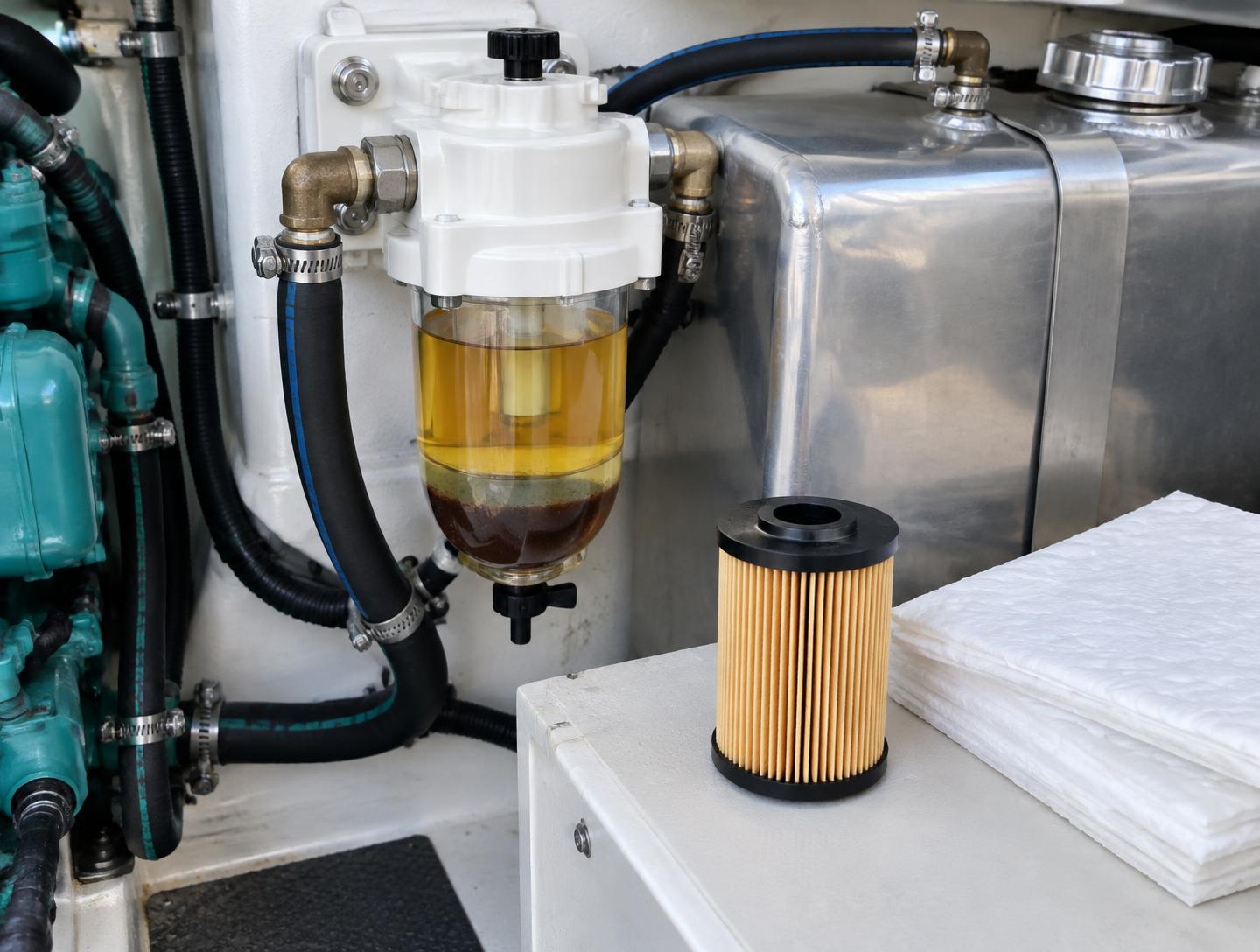
Illustration of a marine diesel tank and fuel separator containing water and sediment, with a spare filter nearby

Tools and materials

  • •Engine, tank and fuel-filter manuals
  • •Correct spare primary and secondary filters with seals
  • •Fuel-compatible sample containers and a microbial test kit or laboratory service
  • •Fuel-safe sampling or transfer equipment, if specified
  • •Suitable labelled waste containers, drip tray and absorbent pads
  • •Gloves and eye protection specified by the product safety data sheet
  • •Fuel and maintenance log, torch and inspection mirror
  • •Marine fuel specialist for contaminated tanks or inaccessible drain points

1. Understand what diesel bug actually is

Diesel bug is the common name for microbial contamination: bacteria, yeasts and fungi growing in a fuel system where water is available, often around the fuel-water interface. Their growth and debris can form slime, obstruct filters and fuel lines, and contribute to corrosion. Water control matters more than simply adding a bottle of treatment.

Dark sludge, stringy material, repeated filter blockage or loss of power are warning signs, not proof of diesel bug. Rust, dirt, ageing fuel and cold-weather waxing can also obstruct filters. Do not diagnose contamination from diesel colour alone: red diesel can be perfectly serviceable. Confirm the cause with representative sampling and appropriate testing.

Read the full guide

Sign up free to read the remaining 6 steps. 30-day free trial, no card needed.

Frequently asked questions

Does black sludge always mean diesel bug?

No. Microbial growth is one possibility, but rust, dirt and degraded fuel can also produce deposits and blockage. Take representative samples, including the tank-bottom or water zone where accessible, and use a suitable microbial test or laboratory assessment.

Will biocide alone cure diesel bug?

No. It may kill susceptible organisms when used correctly, but water, dead microbes and sludge can remain and block filters. Follow the product label and a cleaning plan covering water removal, debris removal, filters and follow-up checks.

Should I keep my diesel tank full over winter?

Follow your engine and tank makers' storage guidance. A fuller tank can reduce breathing, but needs expansion space and must be balanced against storing excessive ageing fuel. Inspect filler seals and remove water; a full tank is not protection against an existing outbreak.

Does fuel polishing remove every diesel bug problem?

Not necessarily. It removes contaminants reached by the circulating fuel and filtration system, but can leave deposits behind baffles or on tank surfaces. Persistent contamination may require physical tank cleaning and a specialist assessment.

Manufacturer references

Advice here is general guidance only — see our disclaimer. Need a professional? Browse local trades.