Guide Library
Engine
Intermediate
15 min read

Treating Diesel Bug: Additives and Fuel Polishing

A bottle of additive cannot make a dirty diesel tank clean. Treating diesel bug means confirming the problem, removing water and debris, using a suitable biocide where appropriate, and checking the system before trusting the engine again. This guide covers wooden and fibreglass diesel boats; the engine, tank, treatment and equipment manufacturers' instructions take priority.

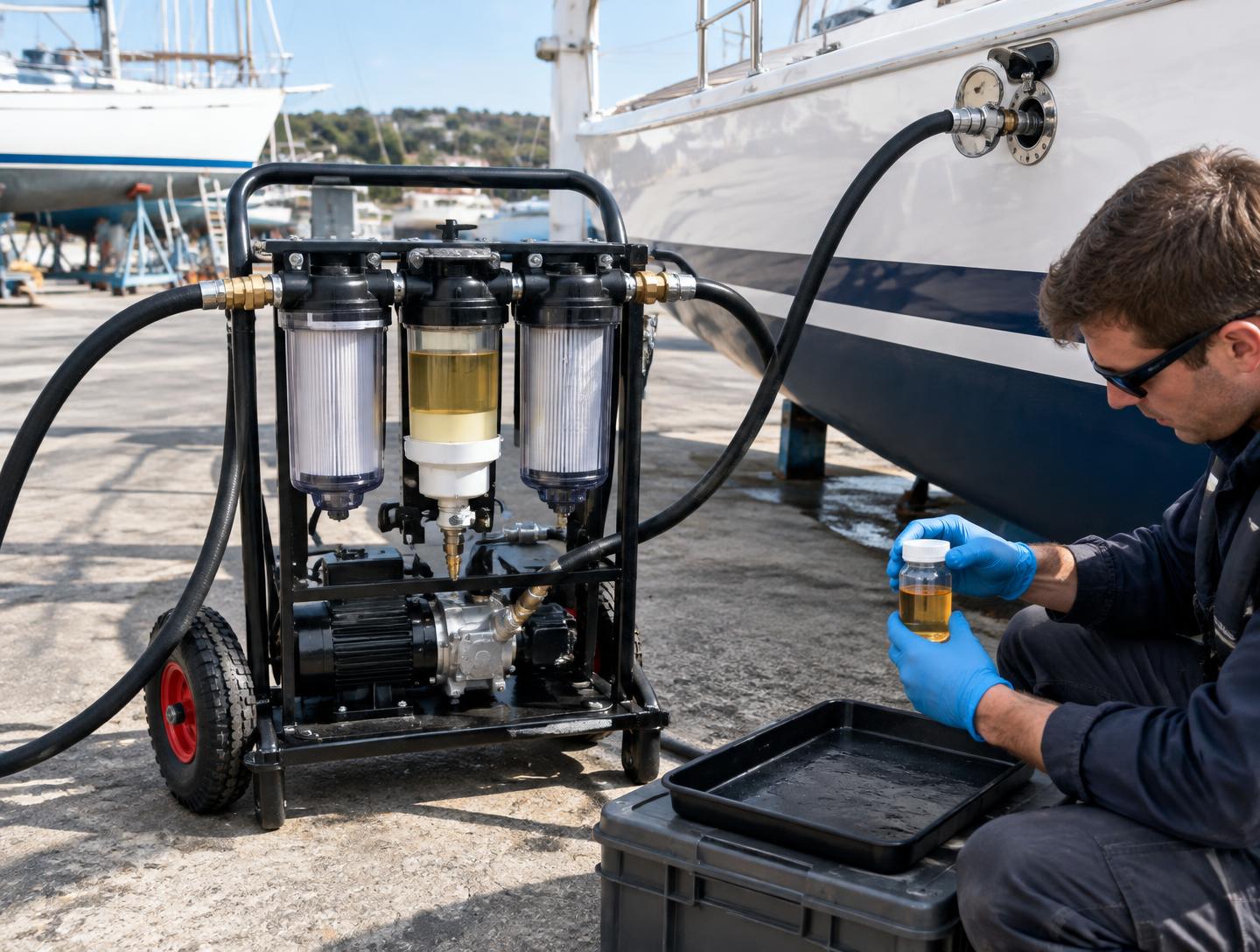
Illustration of a technician inspecting a fuel sample beside portable diesel fuel polishing equipment in a boatyard

Tools and materials

  • •Engine, tank and fuel-filter manuals
  • •Representative fuel samples and a microbial test kit or laboratory service
  • •Suitable authorised diesel biocide, current label and safety data sheet, if treatment is indicated
  • •Accurate fuel-volume record and chemical-compatible measuring equipment
  • •Correct spare primary and secondary filters, seals and bleeding instructions
  • •Labelled fuel-compatible waste containers, drip tray and absorbent pads
  • •Protective gloves and eye protection specified by the safety data sheet
  • •Competent marine fuel specialist with suitable polishing and tank-cleaning equipment

1. Confirm contamination before choosing a treatment

Repeated filter blockage, slime, water in the separator or power loss under load can indicate microbial contamination, but dirt, rust, degraded fuel, waxing and other fuel-system faults can cause similar symptoms. Diesel colour alone is not a diagnosis. Follow a test kit or laboratory's sampling instructions, including the tank-bottom or water zone where safely accessible: a clean sample from the top can miss trouble below.

Do not make a passage with known contaminated fuel. If the engine is unreliable, keep the boat secured and get a marine engineer or fuel specialist to assess it. Stop and cool the engine, isolate starting and follow the maker's procedure before opening filters or sampling points; never loosen common-rail high-pressure injector pipes. Never enter a fuel tank or improvise a new drain hole.

Read the full guide

Sign up free to read the remaining 6 steps. 30-day free trial, no card needed.

Frequently asked questions

What is the best additive for diesel bug?

There is no single product suitable for every boat. If microbial contamination is confirmed, use a legally authorised diesel biocide compatible with your engine, fuel and tank, following its current label. A stabiliser or general conditioner is not automatically a biocide, and water and debris still need removal.

Can filters block after adding a diesel biocide?

Yes. Dead microbial material and disturbed sludge can be carried into the filters. Plan water and debris removal, inspect and change filters as directed, and have persistent blockage investigated before relying on the engine.

Does fuel polishing kill diesel bug?

Polishing removes contaminants reached by its filtration and water-separation system; it is not a guarantee of killing organisms or removing attached biofilm. A specialist may recommend compatible biocide treatment, physical cleaning or replacement of unsuitable fuel as well.

How much biocide should I add, and how long should I wait?

Use the dose and contact time on the chosen product's current label, based on the actual fuel volume being treated. Products differ, so a universal dose or waiting time would be unsafe. Complete the cleaning, filter and follow-up checks as well before returning to service.

Manufacturer references

Advice here is general guidance only — see our disclaimer. Need a professional? Browse local trades.