Guide Library
Hull & Deck
Intermediate
1–2 days per window

Refurbishing and Replacing Boat Windows

Leaking or crazed windows are one of the most common causes of rot in cabin sides and damp interiors. Whether your windows are framed aluminium units or frameless acrylic bonded to the cabin, this guide covers deciding between resealing and replacing, choosing the right glazing and sealant, and refitting so the job lasts for years.

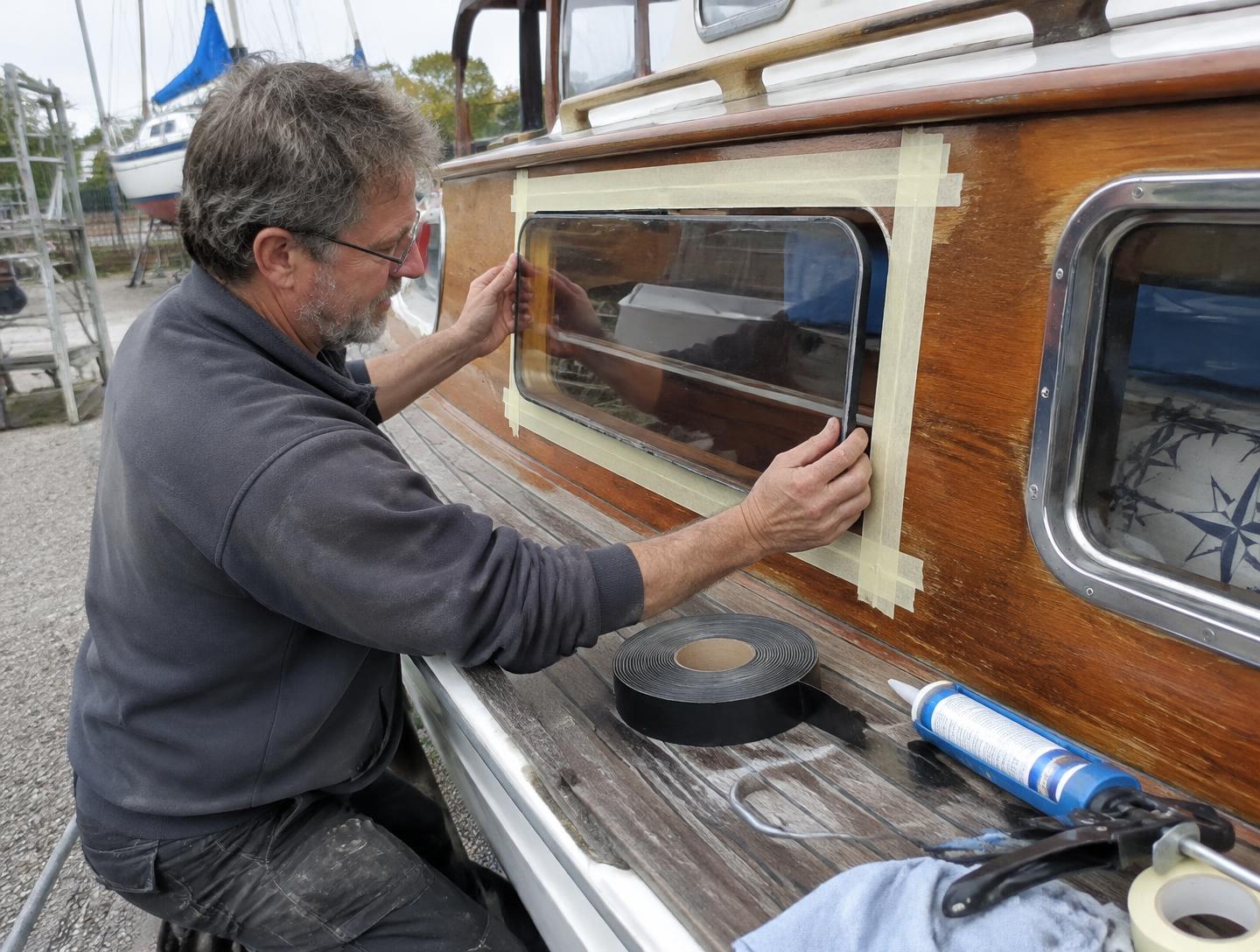
Boat owner fitting a new acrylic window into a masked-off varnished cabin side, with butyl tape and a sealant gun on deck

Tools and materials

  • •Plastic scrapers and a cheese-wire or windscreen wire tool
  • •Multi-tool with a scraper blade
  • •Heat gun (low setting) and hair dryer
  • •Drill, countersink and step drill bits
  • •Jigsaw with fine plastic-cutting blade
  • •Sealant gun (high-ratio for thick sealants)
  • •Masking tape and lint-free cloths
  • •Isopropyl alcohol (never acetone on acrylic)
  • •Butyl tape (e.g. Bed-It tape)
  • •MS polymer sealant (e.g. Sikaflex 291i or Tec7) or structural silicone (Dow 795)
  • •Primer recommended by the sealant maker
  • •Spacer blocks or 3 mm packers
  • •Stainless or bronze machine screws with nylon washers

1. Decide: reseal or replace

Reseal if the glazing is clear and uncracked but water is getting in around the frame. Replace if acrylic is crazed, yellowed or cracked, or if the frame is corroded beyond cleaning.

Check the timber around every window with a probe or bradawl. Soft wood must be cut out and repaired before any window goes back in, or the new seal will fail with it.

Read the full guide

Sign up free to read the remaining 7 steps. 30-day free trial, no card needed.

Frequently asked questions

What is the best sealant for acrylic boat windows?

For bonded frameless acrylic, use a structural silicone such as Dow 795 with its primer. For framed or screwed windows, butyl tape or an acrylic-safe MS polymer such as Sikaflex 291i or Tec7. Avoid 5200-type polyurethanes and bathroom silicone.

Why does my acrylic window crack around the screws?

Usually because the holes were drilled too tight or the screws were over-tightened. Acrylic expands with heat, so drill holes oversize, use nylon washers and tighten only until snug.

Should I use acrylic or polycarbonate?

Cast acrylic suits most boats: clearer, more scratch-resistant and UV-stable. Polycarbonate is much stronger against impact but scratches and yellows unless coated, and needs more room for expansion.

How thick should replacement boat window acrylic be?

Around 6 mm for most small cabin windows, rising to 8–10 mm for large or exposed panes. Check the original thickness and any requirements for your boat's design category.

Advice here is general guidance only — see our disclaimer. Need a professional? Browse local trades.