Guide Library
Woodwork
Beginner
15 min read

Choosing Marine Fastenings: Silicon Bronze, Stainless, Brass and Copper

The wrong fastening can rot timber, corrode in a few seasons or eat away a fitting it touches. This guide explains what each common boat fastening metal is good for, where it should never go, and how to avoid corrosion when different metals meet.

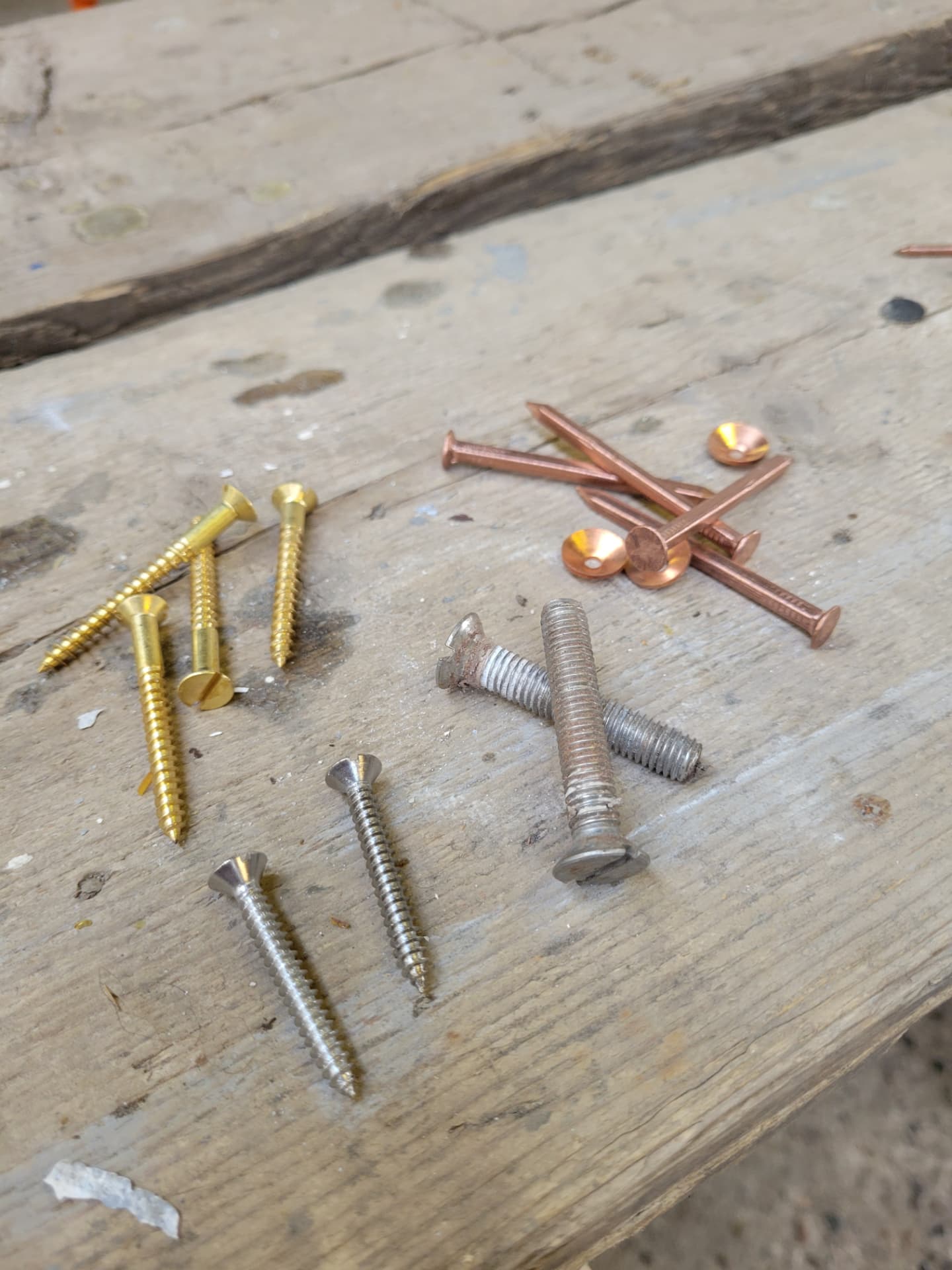
Silicon bronze screws, stainless bolts, brass screws and copper boat nails with roves on a boatbuilder's bench

Tools and materials

  • •Silicon bronze screws and bolts
  • •A4 (316) stainless bolts, washers and nuts
  • •Copper boat nails and roves
  • •Dolly, rove punch and ball-pein hammer
  • •Correct pilot and clearance drill bits
  • •Bedding compound or marine sealant
  • •Duralac or barrier tape for mixed metals

1. Silicon bronze: the wooden boat default

Silicon bronze is the first choice for almost any fastening into timber, above or below the waterline. It is strong, resists salt water very well and does not stain or rot oak and other woods the way steel does.

Use it for plank screws, frame and floor bolts, deck fastenings, rudder fittings, and through-bolting bronze hardware. It costs more than stainless, but on a wooden hull it usually outlasts it.

Silicon bronze is the safest match for bronze seacocks, gudgeons and other bronze fittings, because using the same family of metal avoids galvanic corrosion.

Read the full guide

Sign up free to read the remaining 6 steps. 30-day free trial, no card needed.

Frequently asked questions

Is stainless steel or silicon bronze better for a wooden boat?

Silicon bronze is usually better for fastenings into timber, especially below the waterline. Stainless can suffer crevice corrosion when kept wet without oxygen inside the wood.

Can I use brass screws on a boat?

Only for interior and decorative work. Brass loses its zinc in salt water and becomes weak, so it should never be used below the waterline or in structural joints.

What are copper nails and roves used for?

They are the traditional fastening for clinker planking and steamed ribs. The nail is driven through, a copper rove is pushed over it and the end is riveted over to clamp the timbers together.

How do I stop different metals corroding each other?

Match the fastening to the fitting where possible, and otherwise isolate them with barrier paste, tape or nylon washers, and bed the joint so water cannot collect.

Advice here is general guidance only — see our disclaimer. Need a professional? Browse local trades.