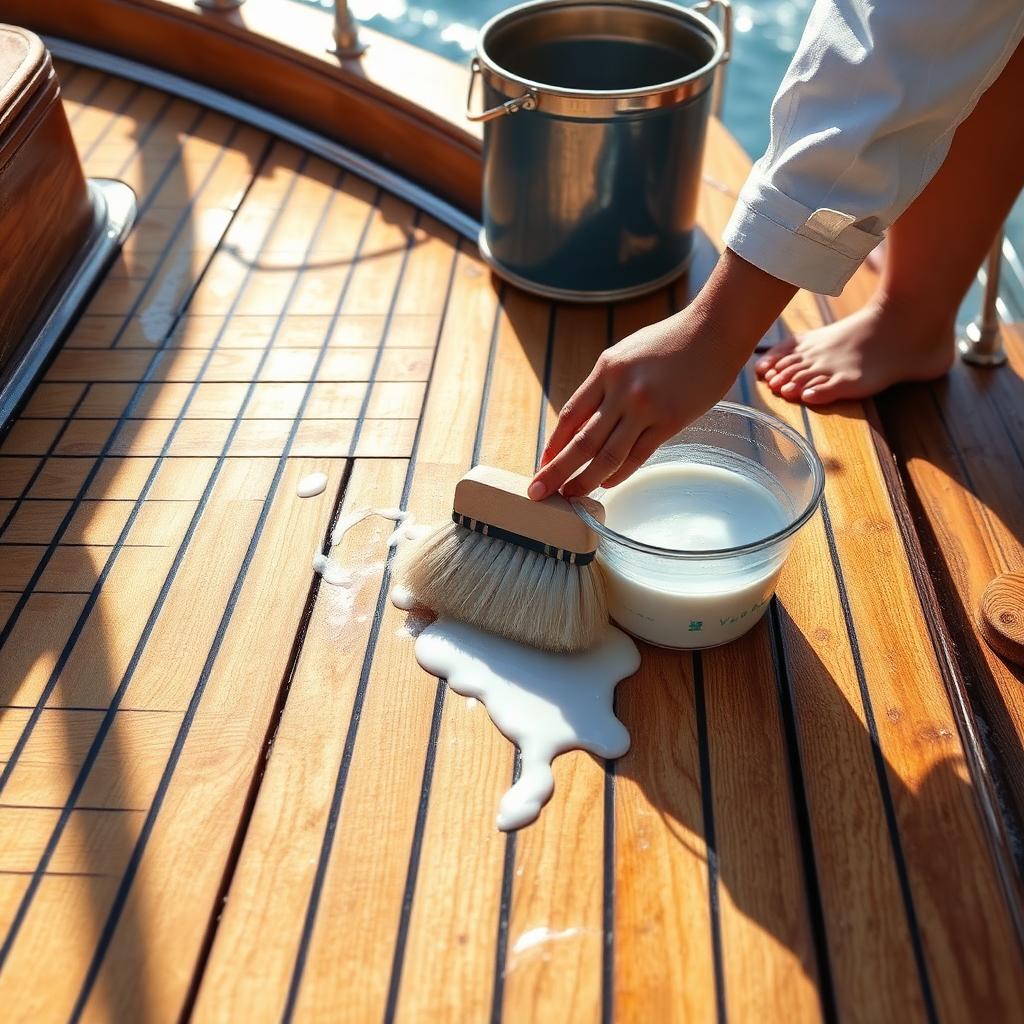
1. Decide whether to strip at all
Varnish that is sound but dull only needs a wash, a light sand and a fresh topcoat. Strip only where the film is cracking, flaking, or water has got underneath and turned the wood black.
Spot-stripping is fine for small failed patches: feather the edges well so the new build-up blends in.
2. Heat and scrape
Keep the heat gun moving and hold it a few inches from the surface. When the varnish bubbles and softens, slide a sharp scraper under it with the grain. Never rest the gun in one spot — scorched wood means extra sanding, and scorched oak can stain permanently.
Use a hook or cabinet scraper on mouldings and corners where a flat scraper cannot reach. Keep scrapers sharp; a blunt edge tears the grain instead of cutting the coating.
3. Chemical stripping where heat is risky
Near glass, plastic fittings, glued joints or thin plywood veneers, use a marine-safe chemical stripper instead of heat. Brush it on thick, cover with polythene to stop it drying out, and give it the full dwell time on the label.
Scrape off the sludge, then neutralise and wash the surface exactly as the product directs. Any residue left behind will stop new varnish from curing.
4. Sand to clean, bright wood
Sand with the grain starting at 80 grit on stubborn patches, then 120, then 180. Use a block on flats so you do not dish the surface, and go by hand on curves.
Every grey weathered fibre and black water stain must come out — anything left will show through the new varnish. Vacuum the dust, then wipe with methylated spirits to lift the last of it.
5. Seal straight away
Bare wood absorbs moisture fast. Apply the first thinned sealing coat of varnish the same day if possible, and never leave stripped wood outside overnight.
From here, follow a normal varnishing routine: thinned sealer coat, then full coats with a light sand between each one.
Common mistakes
Scraping across the grain, which leaves gouges that show through the finish.
Sanding through the face veneer on plywood — work gently and check thickness first.
Varnishing over stripper residue or dust, which causes cratering and poor adhesion.