Guide Library
Rigging
Intermediate
1-2 hours to read and inspect

Dyneema Rigging vs Traditional Wire

More owners are swapping wire shrouds and stays for Dyneema, while plenty of traditional boats stay with galvanised or stainless wire. Both work when chosen and fitted properly. This guide compares them honestly so you can decide what suits your boat, your sailing and your budget, and know what to inspect on whichever you have.

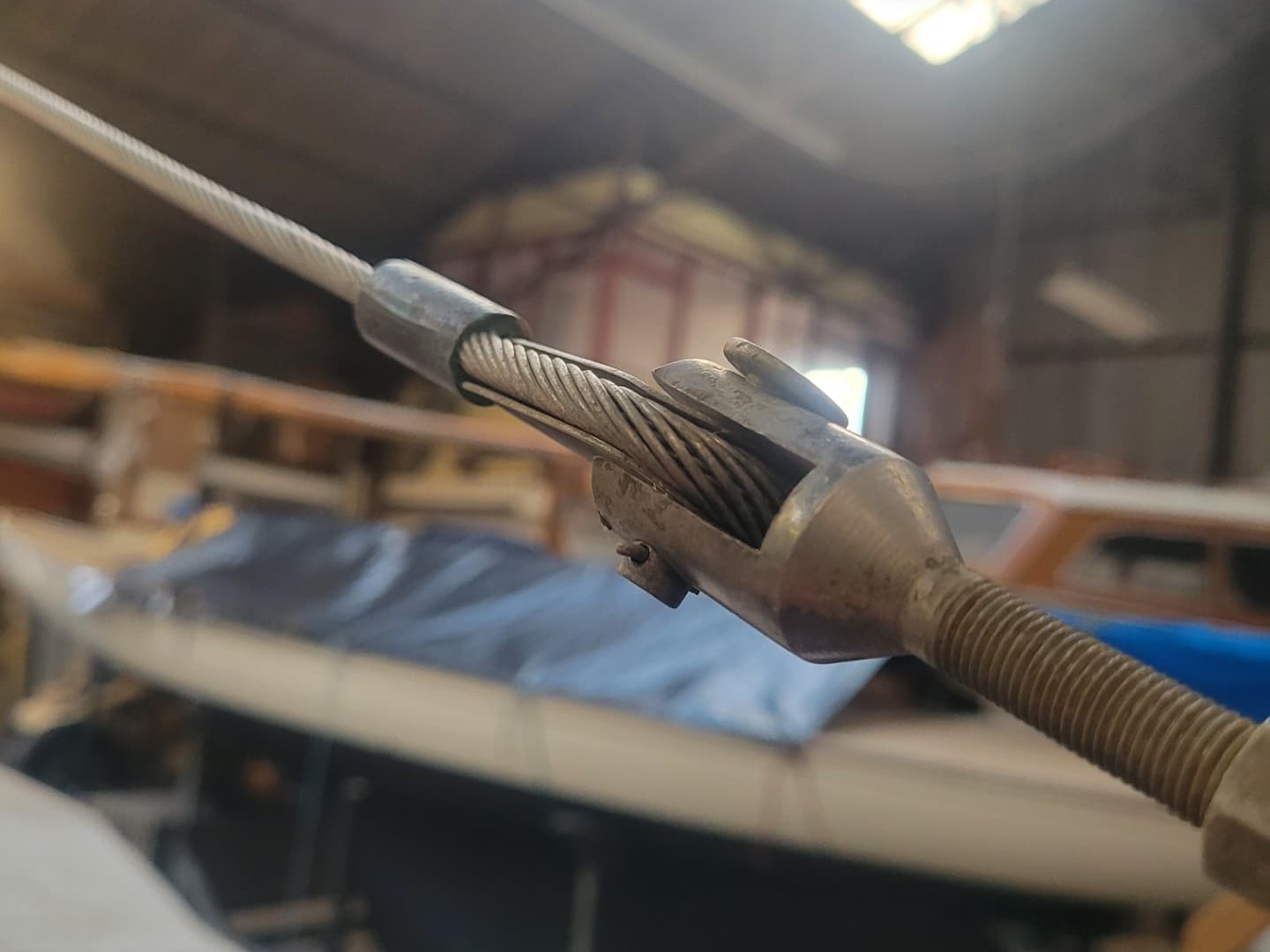
Close-up of a stainless steel wire rigging terminal wedged into its fitting on a threaded tensioner, with boats under covers behind in a boatyard shed

Tools and materials

  • •Binoculars or a bosun's chair for inspecting aloft
  • •Magnifying glass and a torch
  • •Tape measure and vernier calipers
  • •Notebook or the Hullwise log to record each check
  • •Rigging tape and spare lashing line
  • •Your rig's original sizes or a rigger's specification

1. What each one is

Traditional wire is either 1x19 stainless steel (most modern yachts), 7x7 or 7x19 flexible wire, or galvanised steel wire, often served and tarred, on older and classic boats. It ends in swaged, swageless (Sta-Lok, Norseman) or spliced terminals with bottlescrews to tension it.

Dyneema is a very strong polyethylene fibre (HMPE) made into braided rope. For standing rigging, riggers use a heat-stretched or pre-stretched grade, usually SK78 or SK99 core, spliced into eyes and tensioned with lashings through deadeyes or low-friction rings instead of bottlescrews.

Read the full guide

Sign up free to read the remaining 6 steps. 30-day free trial, no card needed.

Frequently asked questions

Is Dyneema stronger than steel wire?

Size for size, high-grade Dyneema is about as strong as stainless wire at a fraction of the weight. It stretches and creeps more, so it is normally fitted a size or two larger.

Can I swap wire for Dyneema at the same diameter?

Usually not. Synthetic standing rigging is normally upsized to control stretch, and the chainplates, spreader tips and tensioning hardware often need changing too. Get sizes from the rope maker or a rigger.

How often should I re-tension Dyneema shrouds?

Check after the first few sails, then at least every fit-out and after any heavy-weather sail. Pre-stretched grades settle far less than standard line.

When should stainless rigging be replaced?

A common rule is about 10 to 15 years, sooner for boats sailed hard or in hot climates, or straight away if you find broken strands or cracked terminals. Check what your insurer requires.

Advice here is general guidance only — see our disclaimer. Need a professional? Browse local trades.