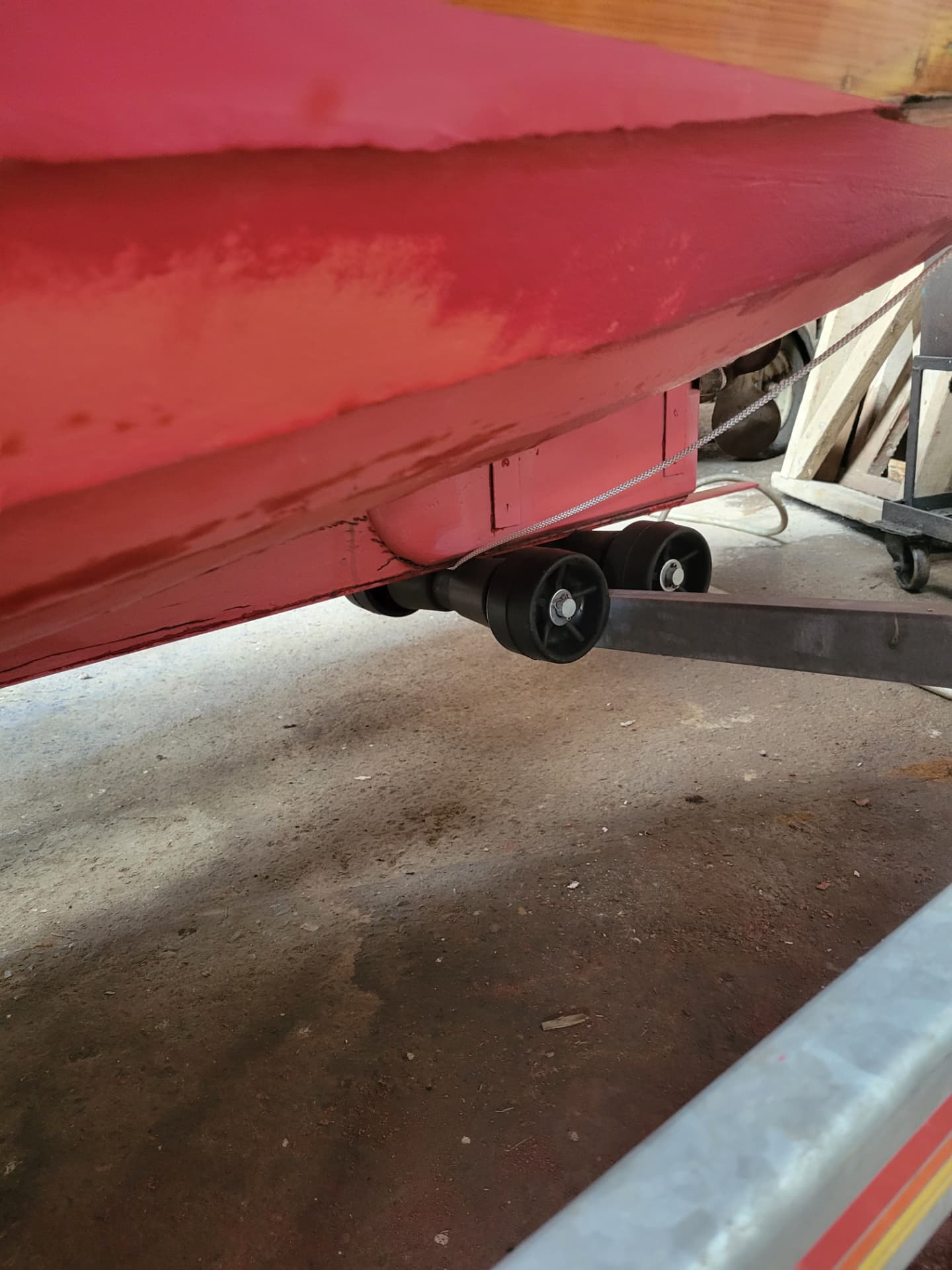
1. Wash off while the hull is still wet
Pressure wash the moment the boat comes out of the water. Slime and weed come off easily when wet and turn to concrete once they have dried in the sun.
Work top down, keep the lance moving, and stay off the gelcoat with a narrow high-pressure jet — you can cut through paint and gelcoat surprisingly fast.
2. Prepare and check compatibility
Scrape off any loose or flaking paint back to a sound edge, then feather the edges with 80-grit so they do not telegraph through the new coat.
Check the new paint is compatible with the old. Hard antifouling over eroding is usually fine; eroding over hard often is not. If you do not know what is on there, or you are switching type, use a sealer coat or take it back to bare and prime.
Fill any gelcoat blisters and let them dry fully. Painting over a wet blister traps the moisture and it comes back bigger.
3. Mask the waterline
Run masking tape along the boot top with the hull dry. A straight waterline is the only part of the job anyone actually looks at.
Sight along the tape from a distance before you commit — small dips are obvious once the boat is afloat.
4. Apply the paint
Stir thoroughly; the biocide settles hard at the bottom of the tin and unstirred paint is barely antifouling at all.
Roll on two full coats, cutting in with the brush first. Apply a third coat on the leading edges, rudder, keel and waterline where wear is highest.
Respect the overcoating times on the tin and the minimum launch time. Most eroding paints want to go in the water within a set window after the final coat.
5. Do not forget the anodes and the prop
Never paint over anodes — a painted anode cannot do its job and your prop and shaft pay for it.
Use a dedicated prop antifoul or prop grease on the propeller and shaft; standard hull antifoul will not stay on bronze.
Common mistakes
Sanding dry without a respirator. Antifouling dust is toxic — always wet-sand and wear proper protection.
Skimping to one coat to save a tin. You will be scrubbing weed by midsummer.
Painting in the rain or below the minimum temperature on the tin, which stops the film curing properly.